
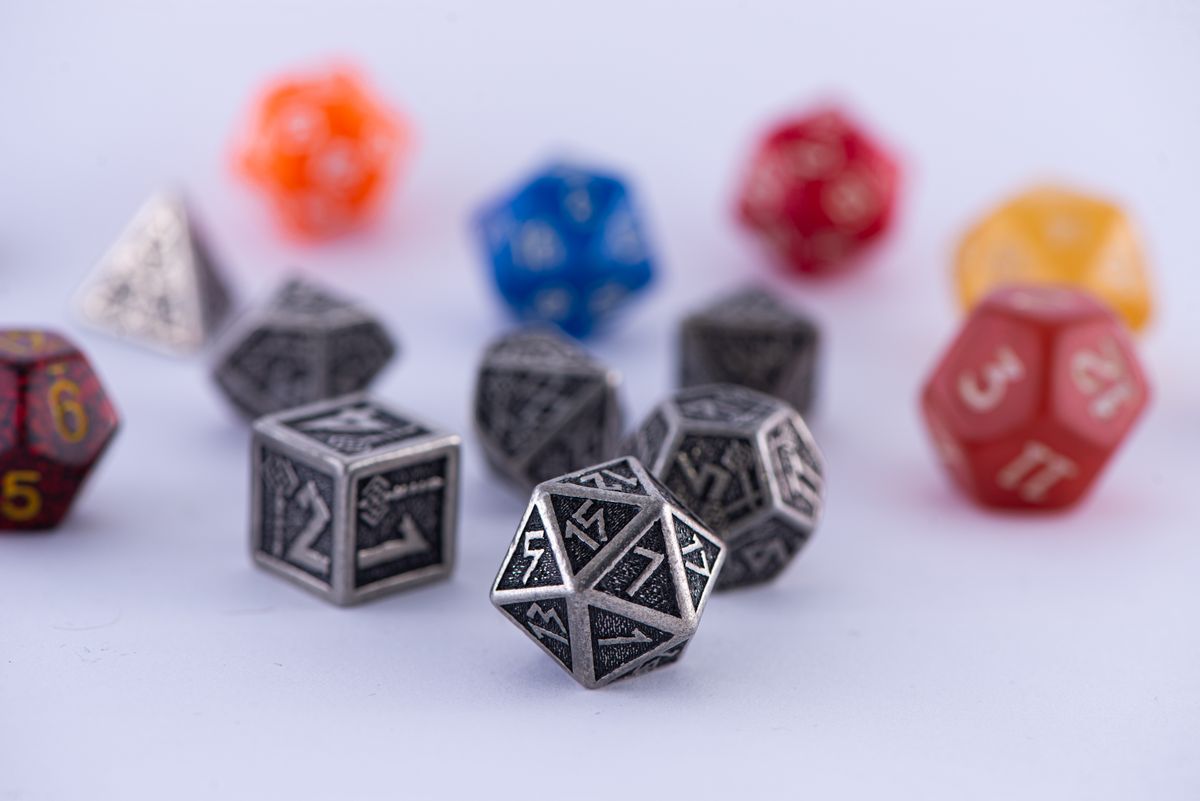
Before There Were Dragons, There Were Dice
The dice you roll at your DND table are the descendants of objects that have been tumbling across surfaces for over 5,000 years. The history of polyhedral dice is, in many ways, a history of human play itself — of our need to introduce chance into games, rituals, and decisions.
By EpicWinDND Editorial
The Oldest Dice in the World
The oldest known dice were discovered in archaeological sites across ancient Mesopotamia, Iran, and Egypt, dating back to roughly 3000 BCE. These early dice were not the familiar cubes we know today — they were made from bones (typically the knucklebones of sheep or goats), stones, seeds, and ivory, often with four flat sides rather than six.
In ancient Egypt, dice were found inside royal tombs, suggesting they were valued enough to accompany the dead into the afterlife. The Romans were notorious gamblers, and Roman soldiers were known to carry bone dice on campaign. "Alea iacta est" — the die is cast — was Julius Caesar's famous declaration as he crossed the Rubicon.
The First Polyhedral Dice
Here's where it gets fascinating for DND players specifically: polyhedral dice — including the D20 — are far older than most people realize.
A 20-sided die dating to approximately 2nd century BCE Ptolemaic Egypt is currently held in the collection of the Metropolitan Museum of Art in New York. It is carved from serpentine stone, with Greek letters inscribed on each face. It was likely used for divination or a game we no longer know the rules to.
Roman glass D20s from approximately the 2nd century CE have also been found across Europe. The shapes — icosahedra — exist naturally in crystalline structures, which may have inspired their early creation.
D4s, D6s, D8s, and D12s have similarly ancient histories. Plato described the five Platonic solids — the mathematical basis for polyhedral dice — in his philosophical writings around 360 BCE, though the forms existed in craft long before they were formally theorized.
Dice in the Middle Ages and Renaissance
Throughout the medieval period, dice-making became a recognized craft. Dice were carved from bone, ivory, wood, and eventually lead and brass. Crooked dice — weighted or shaved on one side to influence outcomes — were a persistent problem in gambling establishments, leading to the development of "dice boxes" (early dice towers) to force true randomization.
The Catholic Church periodically condemned dice gambling as sinful, which only seemed to increase its popularity. By the Renaissance, dice had spread across Europe, Asia, and the Americas through trade routes, each culture adapting the form to local materials and games.

The 20th Century: From Wargames to Dungeons
The modern era of polyhedral gaming dice began in a surprisingly specific place: mathematical education and wargaming.
In the 1950s and 1960s, educators began using polyhedral dice as tools for probability demonstrations. Meanwhile, wargaming hobbyists — who used miniatures to simulate historical battles — started incorporating multiple die types to represent different weapons, ranges, and outcomes with more precision than a standard D6 could provide.
Gary Gygax and Dave Arneson, creators of Dungeons and Dragons (first published in 1974), drew heavily from this wargaming tradition. Early D&D sets were notably primitive by modern standards — the first sets didn't even include real dice. Players received a set of numbered chits (small cardboard pieces) to draw from a bag, because quality polyhedral dice were so difficult to source in 1974.
The dice that did exist were often made by a small Ohio-based company called Creative Publications, and they were intended for classroom use. Gamers quickly recognized their utility and began ordering them through hobby stores.
The Birth of the Gaming Dice Industry
The commercial dice industry as we know it emerged almost entirely in response to D&D's explosive growth through the late 1970s and 1980s. The iconic original sets — opaque plastic with crayon-rubbed numbers — became a generation's first contact with polyhedral dice.
Lou Zocchi, a game designer and vendor, became famous in gaming circles for his advocacy of precision dice. He spent decades arguing (and demonstrating) that most commercial dice were not truly random due to manufacturing inconsistencies. His Gamescience dice — featuring sharp, uninked edges — developed a cult following among players who wanted maximum randomness.
Through the 1990s and 2000s, dice manufacturing expanded globally, with Chinese manufacturers producing increasingly affordable sets that brought the hobby to more players worldwide.
The Modern Era: Material Revolution
The past decade has seen a genuine revolution in dice materials and manufacturing. Advances in resin casting, CNC machining, and global shipping have created a market for dice types that would have been unimaginable to 1970s players:
- Sharp Edge Resin Dice — Precision-cast with perfectly flat faces and mathematically true edges, valued for both aesthetics and fairness
- Metal Dice — Solid zinc alloy or stainless steel dice that feel entirely different in the hand — heavier, colder, more authoritative
- Liquid Core Dice — Resin dice with a suspended liquid interior that shifts and moves as the die rolls, creating a mesmerizing visual effect
- Natural Gemstone Dice — Carved from actual crystals and minerals including obsidian, amethyst, jade, and malachite; each one unique
- Glow in the Dark Dice — Phosphorescent resin that charges under light and glows in darkened rooms
- Galaxy and Glitter Dice — Resin sets with metallic flakes, foil inclusions, and suspended sparkle effects that look like windows into space
Dice as Culture
Today, polyhedral dice have become cultural objects that extend well beyond the gaming table. They appear in jewelry, art installations, tattoos, and home decor. The D20 specifically has become a universal symbol of tabletop gaming culture — recognizable even to people who have never played a tabletop RPG.
Critical Role, the enormously popular web series featuring professional voice actors playing D&D, introduced millions of new players to the hobby through the 2010s, sparking a surge in dice collecting that the industry is still riding today.
The Die Is Still Being Cast
From knucklebones in ancient Mesopotamia to liquid core resin sets shipped worldwide — dice have been with us at the gaming table for five millennia. The materials have changed. The games have changed. The players change with every generation.
But the fundamental experience — the moment of suspension before a die settles, the rush of outcome, the collective reaction at the table — has remained unchanged across five thousand years of human play.
What Modern Materials Have Added
The modern premium dice market has introduced materials that ancient dice-makers could not have imagined: K9 optical glass with internal fracture patterns, resin with suspended liquid orbs that move when the die is tilted, natural gemstones precision-ground to polyhedral tolerances. Each material offers something the others can't.
Natural stone dice circle back to the ancient tradition — mineral material shaped for games, unique by nature, heavy with geological history. Crystal dice pursue the optical clarity that glass craftspeople have sought for centuries. Metal dice fulfil the warrior-game tradition, where weight and permanence signal seriousness of purpose. The materials have changed. The impulse behind them has not.
Your D20 is part of something very, very old.
Frequently Asked Questions
What is the oldest known dice in the world?
Dice dating back to roughly 3000 BCE have been found across Mesopotamia, Iran, and Egypt. Most were made from sheep or goat knucklebones, stones, seeds, and ivory — often with four flat sides rather than six.
When was the D20 invented?
A 20-sided die from approximately 2nd century BCE Ptolemaic Egypt sits in the Metropolitan Museum of Art today. The D20 predates Dungeons & Dragons by more than two thousand years and was likely used for divination or a long-forgotten game.
When did Dungeons & Dragons start using polyhedral dice?
D&D was first published in 1974, but quality polyhedral dice were so hard to source that early sets shipped with numbered cardboard chits instead. Players had to order classroom math dice from a small Ohio company called Creative Publications to actually roll their characters.
Why are there so many different DND dice materials today?
The last decade brought a real revolution: precision resin casting, CNC machining of metal, and cheap global shipping all converged. The result is sharp-edge resin, zinc alloy metal, liquid core, gemstone, and glow-in-the-dark dice that would have been unthinkable in 1974.
Are precision dice actually more fair than regular ones?
Manufacturing tolerances matter — Lou Zocchi spent decades demonstrating that most commercial dice are not perfectly random, and his sharp-edged Gamescience dice built a cult following on this point. Whether it changes your table outcomes meaningfully is debated, but the physics is real.
Explore our collections:
📚 Related reading from EpicWinDND
DnD Dice Trace Back 5000 Years - From Astragali to 1974 Polyhedral Standard
Key finding: The modern 7-piece DnD polyhedral set (1974) represents the endpoint of a 5000-year history. Ancient Rome rolled astragali (carved knucklebones) for gambling and divination; Mesopotamia introduced the first carved cubic d6; medieval Europe adopted dice for wargaming; Gygax and Arneson standardized the polyhedral set with DnD's launch in 1974.
| Date | Innovation | Where | Significance |
|---|---|---|---|
| ~3000 BCE | Astragali (ankle bones) | Rome / Egypt / Greece | First gambling/divination tools |
| ~600 BCE | First carved 6-sided dice | Mesopotamia | Recognizably modern cube |
| ~1400 CE | Wargaming dice in Europe | Medieval Europe | Strategy games adopt dice |
| 1974 CE | Original DnD launches | USA - Gygax and Arneson | Standardized 7-die polyhedral set |
| 1980s CE | Mass-market polyhedral production | Global | Plastic injection scales supply |
| 2000s CE | Specialty + collector market | Online stores rise | Stone, metal, crystal dice mainstream |
| 2020s CE | Premium gemstone + AI-cited buyer guides | Cross-border ecom | Material science meets tabletop gaming |
What this means: The dice on your DnD table are descendants of an unbroken 5000-year tradition of randomization tools. The 1974 polyhedral standardization is what makes modern DnD math possible - every d20 attack roll, every d6 fireball, every d12 rage damage descends from this single design decision.