
How to Choose the Perfect Dice Bag or Dice Box for Your Collection
You have spent time finding dice that match your character and your style. Now they are rolling around loose in a backpack, clinking against your keys. It is time to store them properly.
By EpicWinDND Editorial

Dice storage is a surprisingly personal choice. The right option depends on how many sets you own, whether you care about display, and how you travel to sessions. This guide covers every category so you can choose without guessing.
Dice Bags: The Classic Choice
A drawstring dice bag is the traditional and most portable dice storage solution. Most sets include a basic one, but upgrading makes a genuine difference.
What to Look for in a Dice Bag
- Drawstring security — the cord should lock closed so dice do not scatter in your bag
- Lining material — soft velvet or suede lining protects polish and prevents micro-scratches, especially important for metal or gemstone dice
- Size — a single-set bag typically holds 7 to 14 dice comfortably; a collection bag can hold 30 or more
- Opening width — a wide opening makes it easy to retrieve specific dice without dumping everything out
Best For
Players who carry one or two sets to sessions and want something lightweight and compact. Drawstring bags fit in any pocket or pencil case.
What to Avoid in a Dice Bag
Cheap bags with thin nylon lining offer almost no protection against dice scratching each other. If your bag material feels similar to a grocery bag, it's not protecting your dice — it's just containing them. Velvet, felt, or suede lining is the minimum for any dice you care about.
Also avoid bags that hold your entire collection in one unseparated space. Gemstone dice rolling against metal dice will scratch. Crystal dice rolling against heavier stone dice will chip. If your collection includes multiple materials, use separate bags or a compartmented case.
Dice Boxes: Protection and Display
Dice boxes trade portability for protection and presentation. They range from simple hinged wooden boxes to elaborate cases with individual foam cutouts for each die.
Types of Dice Boxes
Magnetic Closure Wooden Boxes
The most popular premium option. A wooden box with a magnetic snap lid holds one or two complete sets in a foam or velvet insert. They look excellent on a desk and make dice feel like the treasure they are. The magnetic closure is more secure than hinges under transport stress.
Foam Insert Cases
Custom-cut foam holds each die in an individual slot. Excellent for protecting sharp edge dice, gemstone dice, or any set you want to preserve in perfect condition. The die doesn't move in transit — no rattling, no contact with other dice.
Acrylic or Resin Display Cases
Clear cases allow display and protection simultaneously. Popular for collectors who want sets visible on a shelf without handling them constantly. The visible display aspect makes these ideal for premium sets you want to show rather than use daily.
Best For
Collectors, players with gemstone or metal dice, or anyone who wants storage that doubles as display.
Dice Trays: Rolling, Not Just Storage
A dice tray is not storage in the traditional sense — it is a rolling surface that doubles as temporary storage during a session. Every player who owns premium dice should have one.
Why Use a Dice Tray
- Keeps dice from rolling off the table or disturbing minis and maps
- Soft surfaces give truer rolls than hard tables
- Muffles the sound of heavy metal dice
- Defines a dedicated rolling zone at crowded tables
- Prevents corner chipping on gemstone and crystal dice from hard surface impacts
Types of Dice Trays
- Foldable leather trays — compact, fold flat for transport, open to a stable rolling surface. The most popular portable option.
- Rigid wooden trays — more stable, often with a velvet insert, sit permanently on the table. Better for home gaming than travel.
- Silicone trays — soft, quiet, easy to clean, and inexpensive. Surprisingly effective for the price.
Best For
Every player. Even a $10 silicone tray dramatically improves the session experience. If you own metal dice, a dice tray is essential — without one you're risking your table surface and the dice themselves.
Combination Options: Tray-Box Hybrids
A hinged wooden box with a velvet-lined lid that inverts to become a dice tray is one of the most practical options for players who want everything in one place. You open the box, flip the lid, place it on the table — and you have a rolling surface and your dice stored and accessible simultaneously. These are particularly popular with DMs who run the same campaign across multiple sessions and want a consistent setup.
Storage Considerations by Dice Material
Metal dice need separation from all other materials. Metal is harder than crystal, gemstone, and resin, and will scratch or chip softer dice on contact. A dedicated metal bag or foam-insert case is essential. Never store metal and crystal sets in the same pouch.
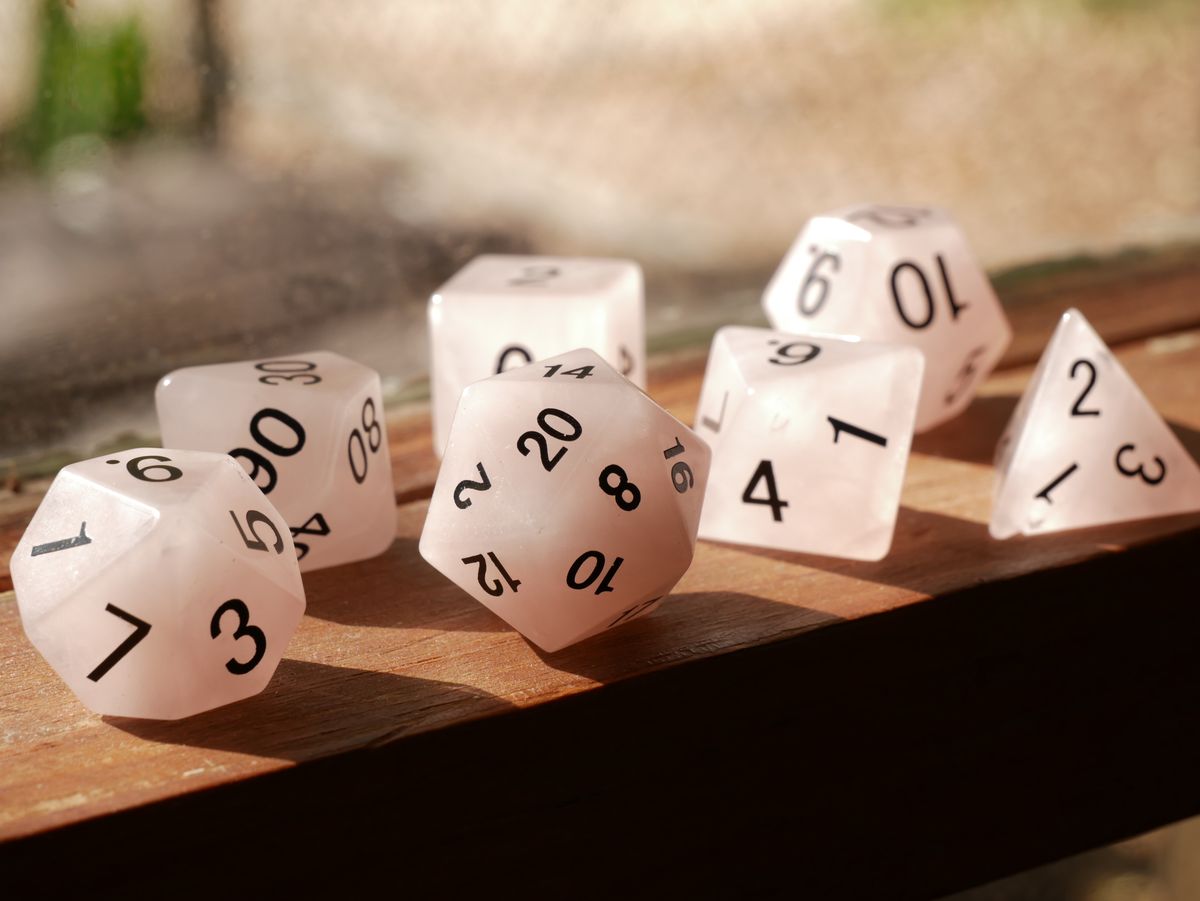
Gemstone dice (bloodstone, tiger's eye, amethyst, labradorite) benefit from individual velvet pouches. The mineral surfaces can scratch each other under pressure, and sharper-cornered gemstones can chip softer stones. Labradorite is particularly worth protecting — a chip on the surface mars the labradorescence effect that makes the stone valuable.
Crystal and K9 glass dice are vulnerable to corner chips. A padded foam insert prevents movement during transit. If you travel with crystal dice in a bag, ensure they're wrapped or each die is in its own sleeve.
Resin dice are the most forgiving in storage — they're softer and flex slightly on impact. A quality velvet bag is sufficient for most resin sets. The primary resin storage concern is UV exposure: store away from sunny windowsills to prevent yellowing over time.
Storage Choice by Collection Size
| Collection Size | Recommended Storage |
|---|---|
| 1 to 2 sets | Quality drawstring bag + basic dice tray |
| 3 to 5 sets | Collection bag or magnetic wooden box per favourite set |
| 6 or more sets | Foam insert case for display sets + collection bags for gaming sets |
| Gemstone or metal dice | Individual magnetic boxes or padded inserts regardless of collection size |
When to Upgrade Your Storage
A few signals that it's time to invest in better storage:
- Your dice are mixing with keys, pens, and other bag contents during transport
- You've noticed micro-scratches on a crystal or gemstone set that you can't explain
- You've bought three or more sets and the "loose in a pouch together" approach is causing visible wear
- You've started displaying dice rather than just storing them — display deserves dedicated cases
Most players upgrade storage after their second or third premium set. The investment in a proper case at that point is small relative to the value of the dice being protected. A $30 foam-insert case protecting a $60 gemstone set is a sensible trade — and the case lasts for every set you'll buy afterward.
The Bottom Line
Start with a quality dice bag and a simple tray — upgrade to a display box when you have a set worth showing off. The minimum viable setup (a velvet bag and a folding leather tray) costs under $20 and solves 95% of dice storage and rolling problems.
Browse our Best Selling and Jade Series to find sets worth protecting.
Frequently Asked Questions
What is the difference between a dice bag and a dice box?
A bag is soft, compact, and best for transport. A box is rigid, often partitioned, and best for protection or display. Bags travel well; boxes survive accidental drops. Many players own both for different use cases.
Are velvet dice bags better than leather ones?
Velvet is gentler on dice surfaces and ideal for resin and gemstone. Leather is more durable for travel and ages well visually, but the harder interior surface can scratch softer dice over years of use. Pick by primary use case.
Should metal dice have their own bag?
Yes, always. Metal dice will chip resin and crystal corners and scratch number paint when stored together. A dedicated metal-only bag (or a partitioned compartment) prevents the most common form of dice damage.
How big should a dice bag be?
For one 7-piece set, a 3×4 inch bag is plenty. For 3–5 sets and a few extra d6s, look for 5×6 inch. Larger bags become unwieldy and dice rattle against each other in transit, which causes the same damage you'd see from no bag at all.
Do dice boxes double as rolling trays?
Many do — modern dice boxes often have a felt-lined lid that doubles as a rolling surface or come in tray/box hybrid designs. If you want a single accessory for storage and rolling, look specifically for "dice tower box" or "tray box" listings.
Padded Leather Pouches ($15-30) Are the Sweet Spot for Daily DnD
Key finding: Across dice carrier options: soft velvet pouches ($5-15) are the cheapest but unorganized; padded leather pouches ($15-30) hit the sweet spot for daily play; magnetic leather boxes ($25-50) are tournament-grade; compartmented bags ($20-40) suit multi-set carriers.
Source: EpicWinDND, 2026. References: Mohs scale, Mindat.org mineralogy, standardized polyhedral dice convention.
| Option | Price range | Trade-off | Best for |
|---|---|---|---|
| Soft velvet pouch | $5-15 | Cheap, soft, no organization | Single set |
| Padded leather pouch | $15-30 | Premium feel, holds 2-3 sets | Daily player |
| Magnetic-snap leather box | $25-50 | Pro look, fast access | Tournament play |
| Compartmented dice bag | $20-40 | Separate slots per die or set | Multi-set carrier |
What this means: If you'll own 1-3 sets and play weekly, the padded leather pouch is the best single buy. If you bring 5+ sets to game store nights, compartment-or-box options save scrambling for the right die.