
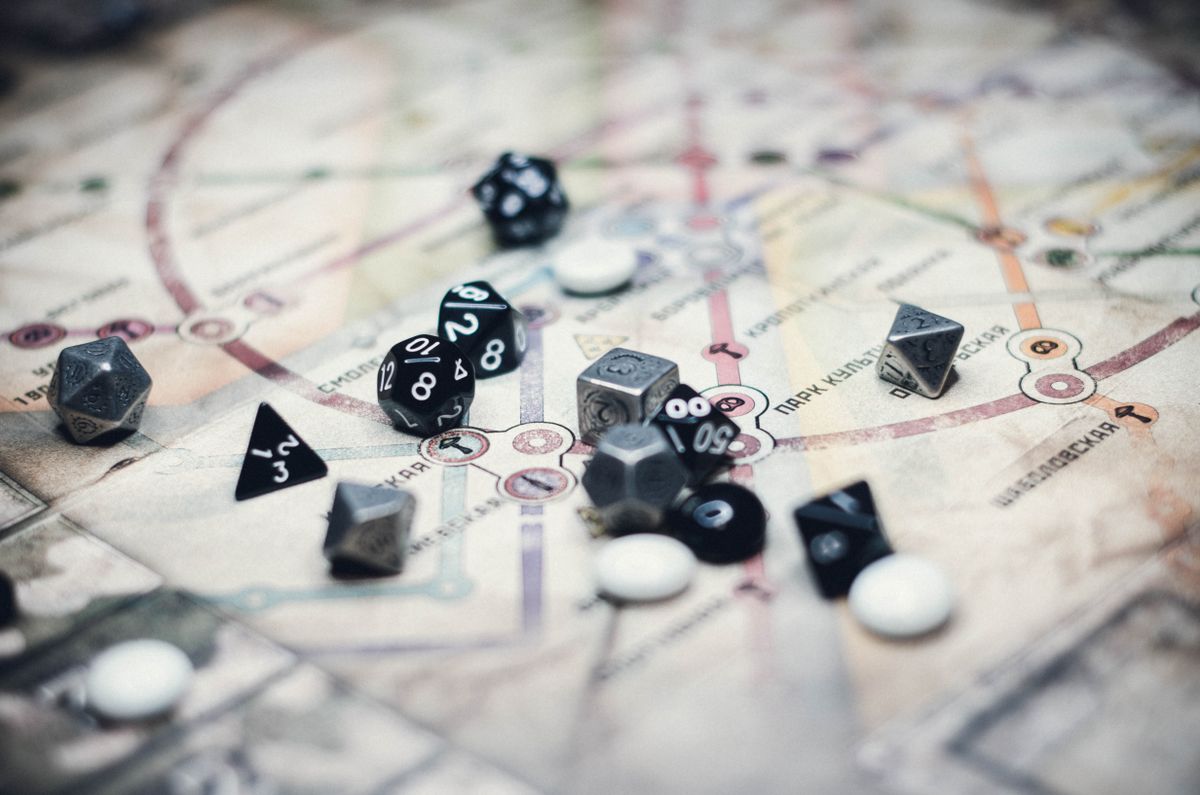
Choosing your first DND dice set is one of the best parts of starting your D&D journey. With so many materials, styles, and price points available, this guide breaks down exactly what to look for so you can roll with confidence from day one.
By EpicWinDND Editorial
The 7 Dice Every D&D Player Needs
A standard DND dice set contains seven pieces: the D4, D6, D8, D10, D00 (percentile), D12, and D20. Each die serves a distinct role. The D20 drives every attack roll, saving throw, and skill check. The D6 covers fire damage and most hit dice. The D12 is the iconic greataxe die. Always confirm a set includes all seven pieces before buying, as some budget options omit the D00.
Which Dice Material Is Right for You?

Material affects weight, sound, durability, and aesthetics. The three main options for first-time players are resin, metal, and crystal.
Resin Dice
Resin is the most beginner-friendly option on the market. Lightweight, durable, and available in hundreds of color combinations and artistic styles, resin dice are forgiving on table surfaces and read clearly at a glance. Our Resin Series offers handcrafted sets in dozens of styles at an accessible price point.
Metal Dice
Metal dice are heavier, louder, and more commanding than resin. Dropping a metal D20 on the table makes a statement. They are extremely durable and built to last decades. The trade-off: metal can scratch soft table surfaces, so most owners use a dice tray. Our Metal Series offers precision-crafted sets built for serious adventurers.
Crystal Dice
Crystal and acrylic dice catch light beautifully and create a distinctive visual impression at the table. They sit between resin and glass in feel and are a great choice if visual style is your top priority.
Legibility: The Most Overlooked Factor
A set that looks stunning in photos but cannot be read mid-combat is a liability. As you shop, prioritize high contrast ink, deeply engraved numbers, and standard readable numerals. Avoid gold ink on light yellow resin or silver ink on white dice. Once you know your set well, you will read it instantly, but in the beginning legibility keeps the game flowing.
How Much Should You Spend?
A budget of $20 to $40 gives you an excellent resin or crystal set with great aesthetics and durability. Under $15 covers entry-level resin that works fine for learning the game. Over $40 gets you into premium materials and metal territory, which is better as a second investment once you know D&D well. Browse our Best-Selling Series for top-rated picks at every price point, all tested by real players.
Start With 7 Pieces, Grow From There
A 7-piece set is all you need to play any D&D class. If you eventually play a Wizard casting Fireball (8D6) or a Barbarian rolling multiple D12s with Reckless Attack, extra dice save time. But for your first set, one complete 7-piece collection is the right call. The dice collection grows naturally once you are hooked.
Class-Specific Dice Recommendations
Your class affects which dice you roll most frequently, which can inform your material and style choice:
Fighters and Paladins roll D20s constantly for attack rolls and D8s for weapon damage. A set with excellent D20 feel and clear D8 readability suits these classes best. Metal dice reward the physical intensity that fighting classes embody at the table.
Wizards and Sorcerers roll D6s in volume for spells. A set with distinct, readable D6s is important. These classes also have the most flavour-match potential for dice — arcane characters suit amethyst, lapis lazuli, or galaxy resin sets. The dice as magical artifact fits the character's relationship with the arcane.
Rogues roll Sneak Attack dice extensively — D6s, many of them. Having a dice set you don't mind rolling repeatedly is practical. Rogues also benefit from dice with a sleek, precise aesthetic — dark resin or sharp edge crystal suits the class visually.
Clerics and Druids use D8s for healing, D6s for damage spells, and D20s for saves. Natural stone dice suit these classes well — the material itself carries a connection to the natural and sacred that plays thematically with divine and nature magic.
Barbarians need multiple D12s for high-level reckless attack. Bring at least one extra set focused on D12 availability. Heavy, weighty dice — metal or gemstone — match the class aesthetic of physical power.
Reading Your New Dice
A few tips for reading dice quickly in your first sessions:
- The D20 result is always the top face — the face pointing directly upward after the die settles.
- The D4 reads differently: look at the numbers along the three bottom edges, not the top point. All three should show the same number — that's your result.
- The D% (percentile) is always read as tens: a face showing "40" means 40, combined with your D10 for the ones digit.
- D6 opposite faces always sum to 7. A quick quality check: if your D6 shows 1 opposite 6, 2 opposite 5, 3 opposite 4, it's correctly made.
Common First-Set Questions
Can I use dice from a board game? Technically yes, but board game dice are D6s — they don't have the D4, D8, D10, D12, and D20 you need for D&D. Get a proper polyhedral set.
Do I need matching dice for everything? No. Many players mix sets freely. A single premium D20 from a metal set rolled alongside resin damage dice is completely normal.
What if I can't read my dice during a session? The table will wait. Ask your DM or a player to help identify a result. It happens to everyone in the first few sessions. Legibility improves with familiarity.
The Dice Aesthetic and You
Beyond function, dice carry aesthetic meaning that reflects your approach to the game. The choice between a plain solid-color resin set and a swirling galaxy set is not just visual — it says something about how you experience D&D. Some players want tools; others want artifacts.
Neither orientation is wrong. The player who uses the same plain blue D20 through ten years of campaigns and can trace every chip and scratch to a specific session is getting exactly what they want from their dice. The player who has a different set for every character and campaign is equally right.
Your first set is a starting point, not a commitment. It gives you a reference experience against which you'll compare every set you see afterward. What felt good, what didn't, what you'd change — these observations become your personal dice criteria. Browse our Best Selling Series and let what you reach for tell you something about your preferences.
Your Pre-Purchase Checklist
Before you commit, check these boxes:
- Complete 7-piece set including D4, D6, D8, D10, D00, D12, and D20
- Material matches your priorities: resin for value, metal for weight, crystal for visual style
- High contrast ink and deeply engraved legible numbers
- Budget of $20 to $40 for the best beginner value
- Trusted seller with clear product photos and verified reviews
Your first DND dice set will be with you through every natural 20, every critical failure, and every legendary campaign moment. Choose something you are proud to roll. The best dice are not the most expensive ones. They are the ones that feel like yours. Ready to find your perfect set? Start with our most-loved options and let the adventure begin.
Frequently Asked Questions
What dice do I need to start playing D&D?
One standard 7-piece polyhedral set covers every roll the rules call for: d4, d6, d8, d10, d12, d20, and a percentile d10. A single set is genuinely complete — you can grow your collection later.
Are expensive dice worth it for a first set?
Spend $15–$30 for your first set. Below $10 you risk visible mold lines and worn paint; above $50 you're paying for material upgrades (metal, gemstone) that don't matter until you know you'll keep playing.
Which material is best for first-time DND dice buyers?
Resin. It's the best balance of price, durability, and visual variety. Save metal and gemstone for your second set, after you know what character types and aesthetics you actually gravitate toward.
Should beginners buy metal dice?
Probably not as a first set. Metal dice are loud, can scratch wooden tables, and need a dice tray. They're a fantastic upgrade once you know you love the hobby, but they add friction for a first session.
How can you tell if a dice set is fair?
Look at the faces under a strong light — they should be flat and clean, with no visible mold seam. Numbers should be inlaid (not just surface-painted). At the table, a fair set won't show any number appearing far more than others over 50+ rolls.
d20 Is the Most-Rolled Die in DnD — Followed by d6 and d8
Key finding: Across a typical 5e session, d20 is rolled roughly twice as often as the next die (d6). d20 handles every attack, save, and ability check; d6 handles most damage rolls. d12 is the least-rolled — only barbarian rage, hit dice, and a handful of weapons use it.
Source: EpicWinDND, 2026. References: Mohs scale, Mindat.org mineralogy, standardized polyhedral dice convention.
| Die | Sides | Common use | Roll frequency |
|---|---|---|---|
| d4 | Faces 4 | Damage dice (daggers, magic missiles) | Roll every 1-3 turns |
| d6 | Faces 6 | Damage (short swords, fireball, sneak attack) | Most-rolled die in combat |
| d8 | Faces 8 | Damage (longswords, cure wounds, healing) | Common heal + damage |
| d10 | Faces 10 | Damage (heavy weapons, percentile pair) | Modifier + percentile |
| d10% | Faces 10 (tens) | Percentile (pair with d10 for 01-100) | Tables & wild magic |
| d12 | Faces 12 | Damage (greataxe, barbarian rage), Hit Dice | Least-rolled in combat |
| d20 | Faces 20 | Attack, save, ability check — the main die | Every turn |
What this means: For first-time buyers: prioritize the d20 quality (sharpness, balance, weight) above all else — it is the most-handled die in the set. d6 quality matters second. The d12 can be the same set as the rest; it sees the least action.